
OVERVIEW
Knox Thomas measured force and pressure during simulated cobot–human collision scenarios using a cobot safety testing device and pressure film metrology. The work compared manufacturer safety parameters (cobot cell supplied as compliant to EN ISO 10218:2011) to measured impact data assessed against ISO/TS 15066:2016 contact limits for transient and quasi-static contact. Findings show that relying on manufacturer thresholds—and simply lowering force/speed—can still leave dangerous pressure exceedances, particularly at the end effector, and that some force-sensing operations can generate initial impact forces greater than three times the programmed value.
The Core Problem
Cobots can stop on self-sensed overload or collisions, but they do not directly measure collision pressure—and pressure can be the decisive failure mode. A generic cobot-centric set of safety parameters is not sufficient: each end effector must be mounted and tested because geometry/contact area drives pressure outcomes.
Our Approach
Method overview
· Set up a torque-driven cobot cell with baseline manufacturer safety parameters.
· Run simulated cobot–human collision scenarios and record outcomes using: (a) a cobot safety testing device for force measurement, and (b) pressure film metrology for contact pressure.
· Compare measured results to ISO/TS 15066:2016 limits for transient (open) contact and quasi-static (trapping) contact.
· Categorise scenarios as acceptable vs. dangerous based on those limits.
Scenarios executed
1. End effector to skull (transient)
2. End effector to fingers/hand (quasi-static; force sensing at 50 N, holding position)
3. Cobot elbow to upper arm (transient sweep)
4. Cobot elbow to torso (transient sweep)
5. Repeat skull test with gripper end effector
Manufacturer safety parameter baseline
· 250 N max force
· 1000 W max power
· 5000 mm/s max speed (limited to 250 mm/s in the program)
· 100 kg·m/s max momentum
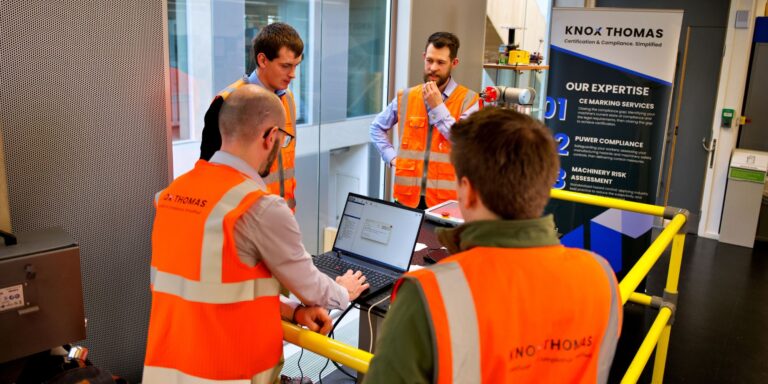
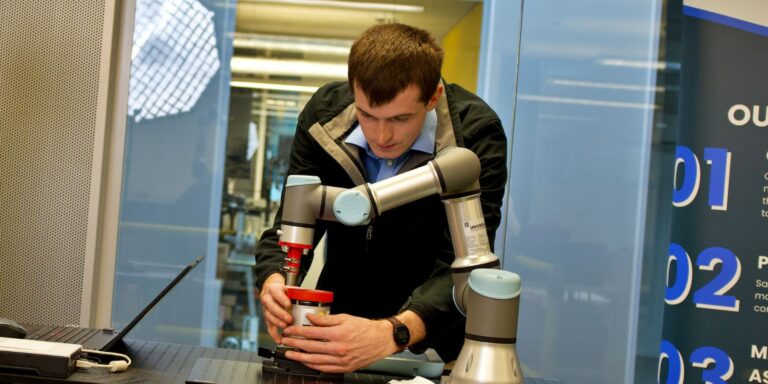

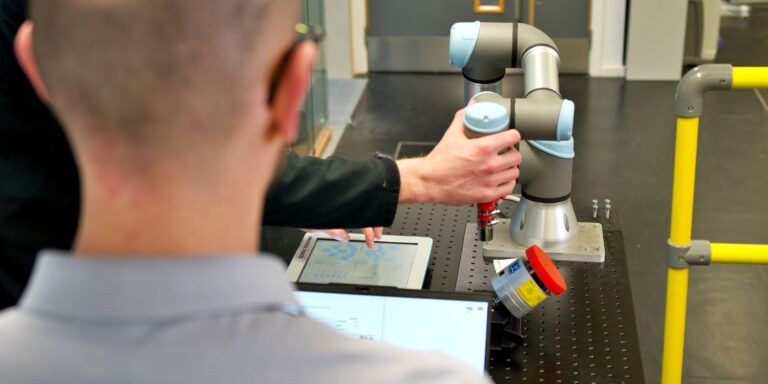
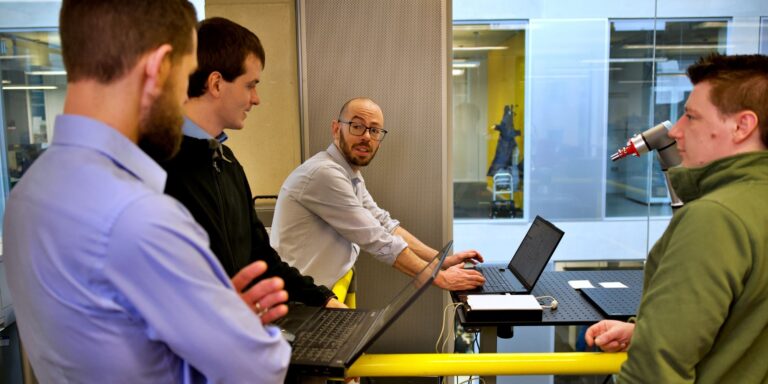
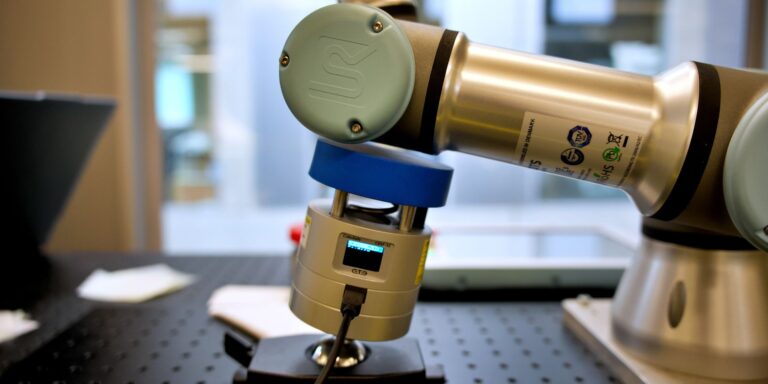
All images credited to James Nightingale.
Key Findings
- Pressure is a blind spot: cobots can stop on overload, but there is no direct pressure measurement during collision; pressure film indicated pressure exceedance was often the key failure.
- End effector drives risk: safe parameters can’t be generic; each end effector should be mounted and tested directly.
- Manufacturer thresholds may not map to ISO/TS 15066: measured force/pressure under baseline settings can exceed allowable limits.
- Lowering force/speed isn’t sufficient: small contact areas can exceed pressure limits even when force/speed are reduced.
- Force-sensing operations can spike: in a locating scenario, initial impact force measured was greater than three times the programmed force.
- Directional force sensing can trigger too late: if a different joint collides than the direction being monitored, the force limit may be reached too late to prevent a dangerous collision.
- Hold-position behaviour can be a hazard mode: if human contact triggers force sensing and the cobot is programmed to hold position, it may not back away like normal collision detection would.