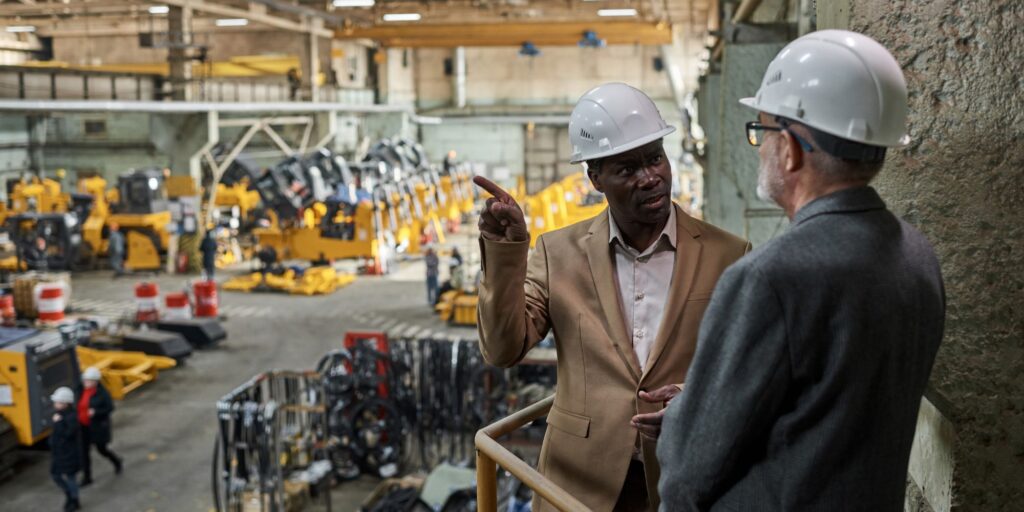
Under both CE and PUWER, machine maintenance is a common theme on the route to compliance.
What does this actually mean in practise though? Read on to find out.
The Regulations

As you may know by now if you’ve read our other blog posts, CE and PUWER place compliance criteria at different ends of the machine supply journey. CE applies at the design stage and must be handled by the designer/manufacturer, while PUWER principally coversend users, as well as equipment hire suppliers.
What this means then, is that machinery maintenance must be considered at the design stage, and at the point of use.
Under the Supply of Machinery (Safety) Regulations, manufacturers must ensure that machinery is designed and supplied such that it can be maintained safely. The core CE criteria are derived from:
• Machinery Directive 2006/42/EC
• UK Supply of Machinery Regulations 2008
• Essential Health and Safety Requirements (EHSRs)
Meanwhile, PUWER requires that all work equipment is maintained in an efficient state, efficient working order, and good repair, so it remains safe throughout its’ use. Where deterioration could create risk, suitable inspections and safe maintenance procedures must also be in place.
Let’s get into what is expected from CE first, then we’ll explore the PUWER side.
CE Marking Compliance
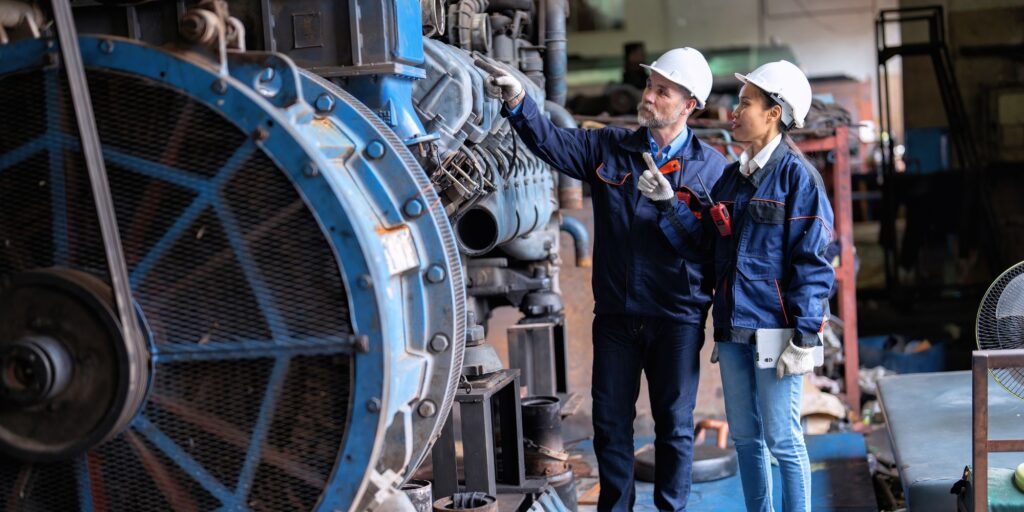
EHSR 1.6: Designed for Safe Maintenance
Manufacturers must design machinery so that adjustment and servicing can be achieved safely. This means that maintenance points should be easily accessible, and routine tasks don’t require exposure to hazards in order to complete them.
Examples of how this may be achieved are things like service points (i.e. grease nipples)being located outside of guarding, provision of safe access panels (rather than removing guarding) and incorporating a safe working position for maintainers.
EHSR 1.6.3: Isolation
Isolation is key to preventing harm through exposure to energy. This means that machinery must be fitted with a means to isolate all present energy sources, such as electrical, hydraulic, pneumatic pressure, and stored energy such as springs, capacitors or even gravity. Inclusion of lockable isolators and pressure release valves are ways to ensure compliance at the design stage.
EHSR 1.4: Guards and Protective Devices
Guards must prevent access during operation, and must not be easily bypassed. They allow intervention safely where it is possible, however must not be able to be removed too easily.
EHSR 1.7.4- Instructions
The manufacturer of machinery must supply instructions for the end user. There are many topics that these instructions must cover, however relating to maintenance, they must describe maintenance intervals, safe procedures, descriptions of parts that require inspection, and descriptions of foreseeable misuse during servicing.
PUWER Maintenance Requirements
If you thought the CE marking list was long, buckle up for PUWER…
Regulation 5: Maintenance
Here’s the essentials: PUWER requires that work equipment is maintained so it remains safe to use, is kept in an efficient working order, and in good repair. They key to compliance here is proactive maintenance, not reactive. This involves creation of planned maintenance regimes, addressing of wear and deterioration before they become hazardous, and ensuring that maintenance reflects the manufacturer guidance (see above) as well as actual usage conditions.
PUWER checks regarding maintenance involve reviewing guarding to ensure it is secure and effective, that emergency stops function correctly, and that safety-related parts are checked routinely.
Regulation 6: Inspection
Where machinery or equipment are exposed to conditions that may cause deterioration, PUWER requires suitable inspections to be carried out. Their frequency and level of detail will depend on the equipment and installation environment, however they should always be carried out after installation, or following relocation.
Under PUWER, inspections should be formally scheduled, the results should be recorded, and defects must be acted on promptly.
Regulation 8: Information and Instructions
If manufacturers have fulfilled their obligations under CE, compliance with this part of PUWER should be straightforward- end users must ensure suitable information is provided to users and maintainers. This can be in the form of manufacturers manuals, which must be understood by those receiving them. Additional site-specific procedures should also be produced by the end user where required.
Regulation 9: Training
Anyone maintaining machinery must have adequate training, ensuring that maintenance staff are competent, are conversant with safety critical elements, and that their understanding is assessed.
Regulation 11: Dangerous Parts
If guards must be removed for maintenance purposes, risk must be controlled through safe systems of work, interlocked guards, restricted access or alternative protective measures. This means that maintenance must not simply rely on unsafe bypassing, and that temporary controls are documented and supervised.
Regulation 18: Control Systems
Under PUWER, safety systems must be tested periodically, and faults with systems must not create new hazards. This is to verify that control systems remain reliable and safe, and aren’t prone to unintended operation.
Regulation 22- Maintenance Operations
A requirement of PUWER is that employers must ensure that maintenance can be carried out without exposing people to harm. Therefore, machinery must be designed or adapted so that access is safe, isolation is possible, and carrying out maintenance activities is safe.
This is achieved through measures such as adoption of lock out and isolation procedures, safe access platforms or guarding provision, and ensuring staff competence.
The Last Word in Machinery Maintenance

As we’ve established, management of machinery maintenance is crucial at both the design stage and once a machine is in service. CE marking gives you a baseline in safety design, ensures proper maintenance instructions are provided, as well as an initial risk assessment, relating to the machine itself.
PUWER ensures that these controls remain effective in practice, that the safety functions continue to work, and safeguards against deterioration that may cause danger or harm.
Navigating either set of compliance rules can be a challenge, either as a manufacturer looking to ensure their prized design remains compliant as well as operationally functional; or as an end user- even a box-fresh piece of kit can fail a PUWER assessment if design and suitability are not accounted for.
Knox Thomas can help, at both ends of the spectrum. From assessing your product and identifying design safety shortfalls, to reviewing equipment (new or existing) in your workplace for safety issues, we’re here to guide you through either scenario and ensure your equipment is safe to use and compliant, giving you peace of mind and ensuring product longevity too.
To see how we can help you with all machinery maintenance concerns, get in touch today.